
why we are asking the wrong question
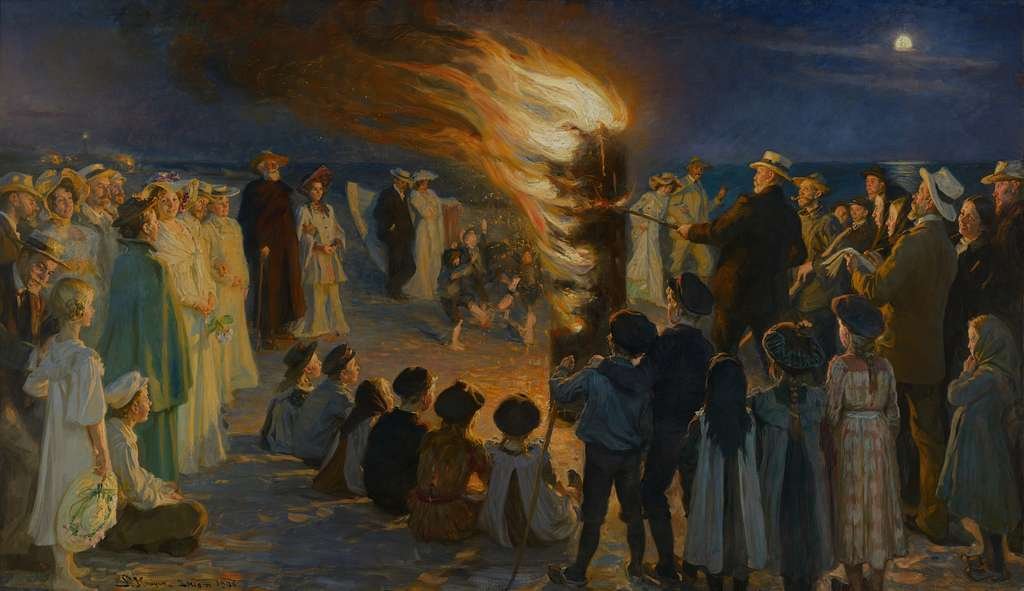
As a part of Scandinavian tradition, during Summer Solstice communities gather around in the nature to light a bonfire. There is many stable parts of this tradition – to have a speech by a local, addressing what lies on hearts of the community, to be together during the lightest night, sing folk songs and burn a witch.
As a Slavic migrant, this tradition was somewhat shocking, or at least very intriguing to me. Even though we too, burn Marzanna with spring start, as a way of banishing winter and its evils. First is the peculiarity of observing puritanism and traditions of the protestant church as one who grew up in catholic tradition. The understanding of ethnology and history of the Nordic Europeans. And with all the understanding and the knowing, there still was pain – this is my own soul story, who once experienced the flames being used against who was then me, the injustice of being deemed a witch, which I had to face while standing in the middle of a cheery crowd. A vulnerable experience which brings forth a rich pallet of feelings. I had an opportunity to go within, and being a Hermetic/Gnostic, look into all this depths of karmic murkiness until this Skt Hans something clicked finally. I am asking a wrong question. We are asking a wrong question as a collective.
National TV, DR1, while streaming live bonfire celebrations from Vejle, asked and open question how people feel about the witch, a thing I love about Danes, the openness of conversation and speaking loudly, that we do not have to agree, and addressing pain and horrible mistreatment of people convicted to witchcraft and burned in the 1600s. The question was does the witch belong at the stake. What was illuminated for me is – what evil should we be burning?
History of the witch doll
Since late 1800s – start 1900, a figure of witch was introduced to the traditions of celebrating Skt. Hans – St John the Baptist night. So it is not a centuries old tradition, it doesn’t even reach to the tragic history of witch hunt with its apogee in Denmark in XVI-XVII centuries, especially around rule of king Christian IV. Now, why do we even have a witch introduced circa 300 years after the dark tragedies? According to the historians at National Museum in Copenhagen, the witch was first introduced during the Walpurgis night the 30th of April, not during Solstice, rebranded as St Johns night and moved to 23rd June from astronomical 21st. We can find some clues in Jelling Seminary, a place to educate future teachers, and perhaps, digging deeper, in the growing mythologizing of national identity.
After the losses of 1800s Denmark took a big toll on their national identity and needed a boost in morale, which was supported by the fantasy like history of Jelling kings, of the one divinely supported lineage from Gorm the Old and the whole bloodline being one, cohesive and most importantly – strong. The hub of Jelling as origin place of Danish royal line, with the monuments, legendary rune stones and lore only strengthens the idea, that the myth of Denmark is streaming from here. The young teachers and the academics, lively working on their idea of forming, idealizing and cultivating the peoples story of Danes, could very well have though it’s a great idea to bring a fable witch to the fire, as a form of common enemy, a common symbol of evil. That is, my own and personal contemplation based on the net of happenings, themes and topics of this time period. Period, in which Europe was obsessed with writing down its stories, and creating national myths, so needed after being plagued by the Napoleonic wars and many bloody conflicts of the 1800s, with great change in industrialization. The idea of identity and belonging was desperately needing a support from the cultural intellectuals and storytellers, fables used as a way of connecting back to “the roots”. That is the century of Andersen ad Grimm, of making our still relevant, story of what a fairy tale is.
If we look further back, and cross culturally, the summer solstice has been a part of human tradition as far back as we can reach in research material. It is documented from at least Neolithic era, and prominently in Bronze Age. The four points of solar movement with equinoxes and solstices, mapped the rhythm of the solar year. Each solar event has its own celebration. Here we can see the Nebra sky disc, a reproduction I photographed in Moesgaard Museum.
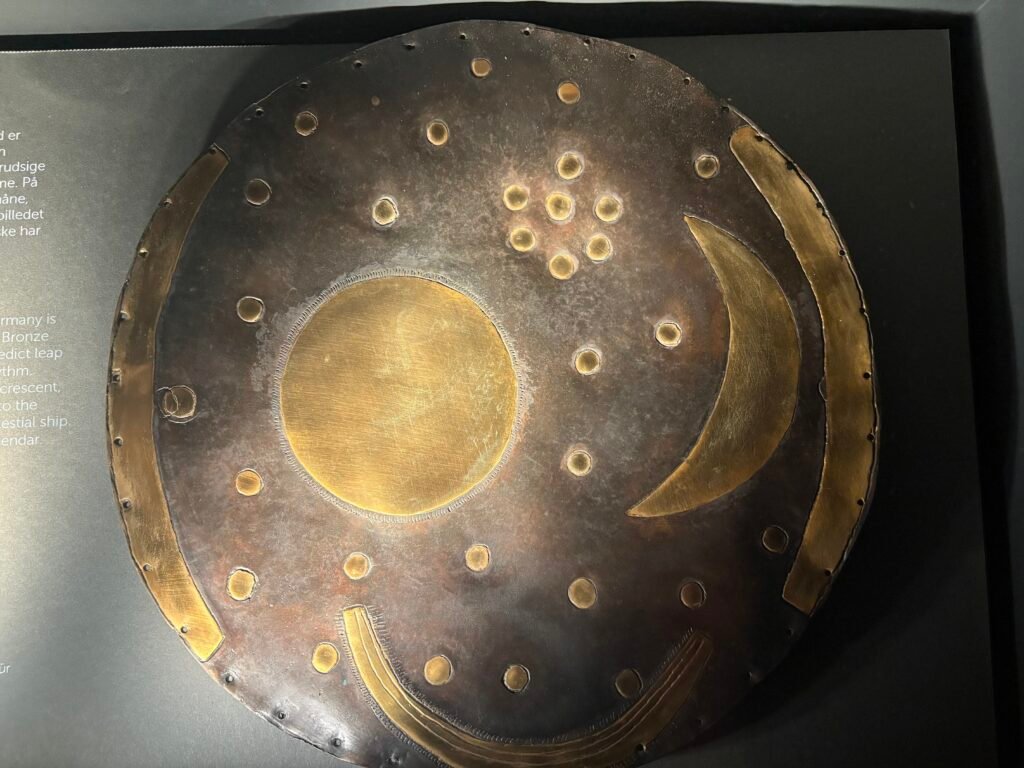
To celebrate Solar power and the element of fire at the time of Summer Solstice, when the Light is in its Ultimate is an obvious connection, one we can understand our forefathers in clearly and even continue the tradition.
In Slavic folk tradition, durnig St John the Baptist night or Noc Swietojanska ( pre christianization sobótka and in estern Slavic nations Noc Kupaly) a bonfire is lit, solar and fire powers celebrated. Men jump through the fire as a way of purification and test of bravery. And many more traditions follow. Germanic folks, Finn tribes, the Celtic tribes with Litha – pretty much all the cultures have a version of their own to celebrate the Summer Solstice.
ST. John rebrand
Why rebrand the Solstice with John the Baptist? During establishment of christian tradition over the “pagan” (really don’t like that word) natural culture, John the Baptist birthday celebration was put over the Solstice. A powerful move, as Solstice could not be taken away from peoples calendar, just like winter Solstice (Jesus Birthday), Spring equinox (Jesuse’s death) and winter equinox (day of the dead), John working with water magick and initiating people onto Gnostic path, with his own disciples, and his own great spiritual authority living in mandaeism appears surprisingly naturally cohesive to support the purification aspect of the solar power. His Solar Christ authority and powerful abilities would frame the prechristian theme into a church approved ritual. I invite you to read up on John, and we will be also writing further on his role and importance at Cor.
Switch the witch
If we choose to take a step back from the heated debate and the pain we feel about women being hurt, instead looking deeper at the core issue we have a new question arise. If we have a natural culture of a purification celebration, with power of Sun and the Fire on our side, in which we can burn evil – what evil as a society will we burn. And what does it look like? What symbol can we choose to represent the wickedness in us as human, to be purified off.
If we look at the still not resolved issues from the published files and the exposed pdfs. At the Terra Sancta being a literal slaughterhouse for genocide. The historical Eden in the Fertile Crescent, with Mother Gaia’s creative energy points and lay lines, being a parade of atrocities against women children and safety. At the Great Empire hosting a great world cup, and waving around its authoritarianism and prejudice against particular nations while wanting to appear as a worthy of international authority and lead. The circus of falling Rome. Natural resources being threatened hand in hand with freedom to governance over ones privacy by data centers. Still! postcolonial mentality of western culture. There is a lot we could be looking at as humanity and deciding to burn.
And that’s even if I have self experienced effects from malefic witchcraft, firsthand. Yes there are bad witches, and they go after actors of light. But they also tend to fall into the same category of human behavior which is ego led and hungry for dominance due to own incompetence in sufficient soul growth and integration to reach to deeper layer of consciousness.
If it was up to me, I would ch0ose a symbol which is universal of elitist enslavement of peoples, of informational abuse, of control dis-empowering people away from free will and from universal birthright of sovereignty.
A simple, black cube.
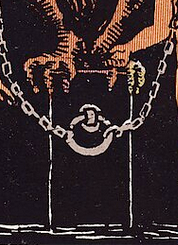
Here the incomplete cube from Tarot, Death Card