
The Raven Was Never Black:
What Iridescent Feathers Can Teach Us About Death, Transformation, and the Rainbow Bridge
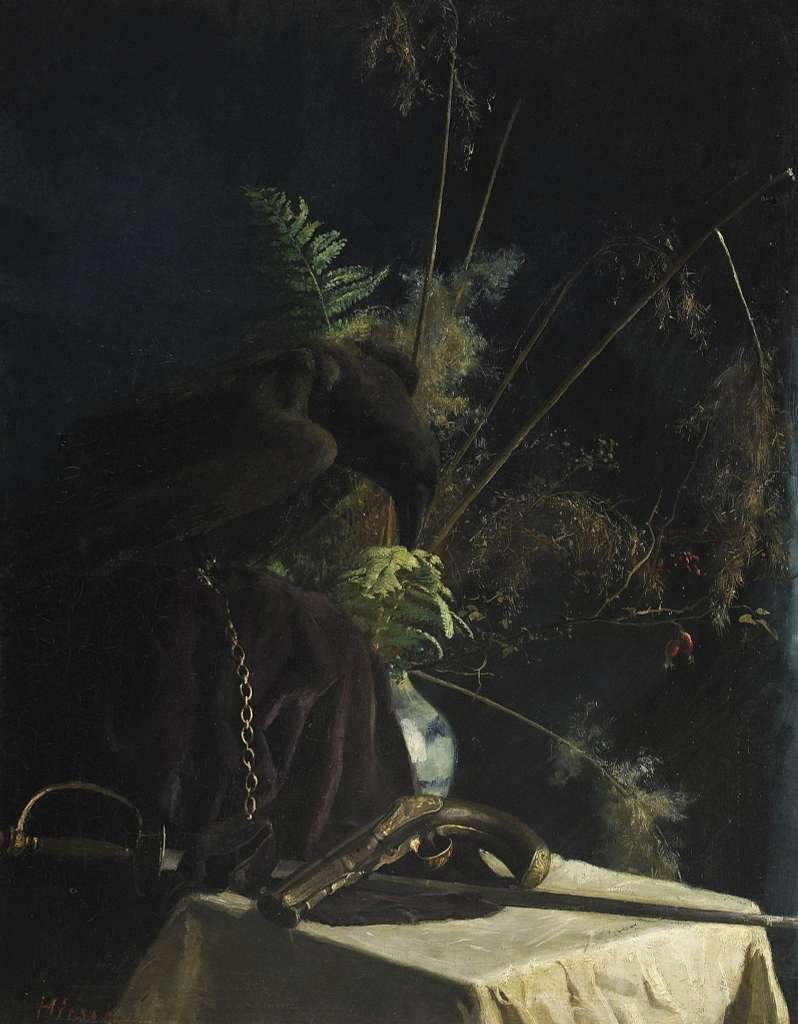
For much of my life, I thought of ravens in the way many people do. They seemed to embody mystery and darkness, carrying with them the symbolism of endings, death, and the unknown. Their glossy feathers appeared almost entirely black, absorbing the light around them and giving them an otherworldly quality that has inspired stories and superstitions for thousands of years.
And yet, as is so often the case, nature reveals that things are rarely as simple as they first appear.
What surprised me most when I learned about the science behind raven plumage was the discovery that ravens are not truly black at all. Their feathers contain microscopic structures that interact with light in such a way that they produce iridescent flashes of blue, violet, green, and even rainbow hues. From one angle they appear dark and monochrome, but from another they shimmer with unexpected colors that were hidden there all along.
The colors are not added by the light. They have always been present. It is only our perspective that changes.
There is something deeply poetic about this. Perhaps because I cannot help but wonder whether many of the things we fear and misunderstand are much the same. We are often quick to associate darkness with emptiness and endings with loss. We imagine death as something cold and colorless, and we tend to view mystery through the lens of uncertainty rather than possibility. Yet the natural world repeatedly reminds us that darkness is not synonymous with absence.
The night sky appears black to our eyes, and yet it contains stars, galaxies, and wonders beyond comprehension. The rich soil from which forests emerge is dark and hidden. Seeds germinate beneath the earth before they ever reach toward the sun. Even the womb itself is a place of darkness, and from it new life enters the world. Perhaps darkness has never been the opposite of life at all. Perhaps it has always been the realm of transformation.
As I reflected on the hidden colors within raven feathers, my thoughts wandered toward the old stories of the North. In Norse mythology, the rainbow bridge known as Bifröst connects Midgard, the world of human beings, with the realms beyond. It is not portrayed as a wall or a final boundary, but rather as a bridge—a symbol of connection and passage. There is something profoundly beautiful in that image. A bridge exists not to separate, but to allow movement between places. It speaks of continuity rather than annihilation.
One of the reasons the raven occupies such a powerful place in the mythology of the North is through its association with Odin, the Allfather and seeker of wisdom. Accompanying him are two ravens, Huginn and Muninn, whose names are commonly translated as Thought and Memory, though some scholars also interpret Muninn more broadly as Mind or Consciousness. Each day they fly across the Nine Worlds, witnessing the happenings of gods and mortals alike before returning to whisper their knowledge into Odin’s ears. Far from being symbols of doom alone, these ravens represent awareness, remembrance, and the continual gathering of wisdom. They are messengers between realms, creatures capable of moving between what is visible and what lies beyond ordinary perception.
In this light, the raven takes on a meaning far richer than the dark omen it is sometimes portrayed to be. Odin himself is not merely a god of war, but also a relentless seeker of understanding, one who sacrificed greatly in pursuit of wisdom. It seems fitting that his companions should be creatures whose own feathers conceal unexpected colors beneath their dark exterior. There is something almost symbolic in that hidden iridescence. Just as Huginn and Muninn travel beyond the boundaries of the familiar and return with deeper knowledge, perhaps we too are invited to look beyond appearances and discover that mystery contains far more beauty and depth than we first imagined.
Seen in this way, the raven becomes less a herald of endings and more a companion of transformation. It reminds us that wisdom often comes from learning to perceive what lies beneath the surface, and that some truths reveal themselves only when viewed from a different angle. Perhaps this is why the old stories placed ravens beside the god of wisdom himself. They were never simply birds of darkness, but keepers of memory, carriers of thought, and messengers between worlds, their rainbow-touched feathers quietly reflecting the deeper mystery woven through life itself.
Perhaps this is why ravens have captivated the human imagination for so long. They seem to stand at the threshold between worlds, reminding us that reality may be richer and more nuanced than our first impressions allow.
I find myself wondering whether grief and loss might possess a similar kind of hidden iridescence. Not because suffering itself is beautiful, and certainly not because pain should be romanticized, but because so many people who have walked through profound sorrow speak of discovering unexpected gifts hidden within the experience. They speak of deeper compassion, greater wisdom, renewed gratitude, and a gentler understanding of what truly matters. These qualities are not created by suffering itself, just as the rainbow colors are not created by the sunlight. Rather, difficult experiences can sometimes illuminate dimensions of ourselves that were always present, waiting to be revealed.
Perhaps this is one of the quiet teachings offered by the raven.
Not everything that appears black is devoid of color. Not everything hidden is empty. And not every ending is simply an ending.
Sometimes, what we perceive as darkness is merely a mystery whose colors have not yet caught the light.
And perhaps that is why the image of Bifröst, the great rainbow bridge of the North, feels so profoundly hopeful. It reminds us that there are ways of understanding life that do not see death as a wall, but as a passage; not as the extinguishing of meaning, but as part of a larger mystery that human beings have sought to understand since the beginning of time.
The raven, shimmering with colors invisible at first glance, seems to whisper the same truth that the ancient myths preserved in their stories: that reality is often more beautiful, more mysterious, and more radiant than we imagine.
Perhaps all that is required is a different angle, and the willingness to let the light reveal what has been there all along.