
Lion, Lyra and Unicorns: A Journey Through Symbols of Power, Purity and the Heart
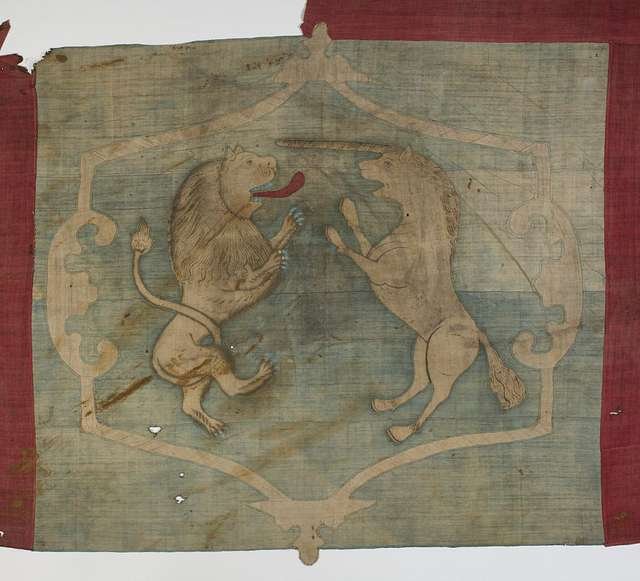
The ancient conversation between the lion and the unicorn
“The lion and the unicorn,
Were fighting for the crown;
The lion beat the unicorn,
All around the town.
Some gave him white bread,
Some gave him brown,
Some gave him plum cake,
And sent him out of town.”
When I was a kid, this nursery rhyme, translated to my native language, found it’s way to our backyard plays. I was strangely obsessed with it, not understanding why, but the unicorns and the lions were both really important to me growing up. After begging for a real unicorn, my dad sat with me and hand sew a plush unicorn from golden satin fabric, and it was my beloved companion for years, symbolizing both the pure magical animal, and the pure magic of fatherly love.
Year after, and through deep studies, it clicked to me why this rhyme sat so deeply, which string was it striking in my heart.
This familiar rhyme from the Mother Goose tradition carries a strange and fascinating image: two impossible creatures, the lion and the unicorn, fighting over a crown. At first glance, it appears to be a simple children’s rhyme. A tale of competition, victory, and defeat. The lion overcomes the unicorn and receives the rewards of the crowd. Yet there is something unsettling hidden within the simplicity of the story. The lion wins — but the ending does not feel like a true triumph. The victorious figure is eventually sent away.
Perhaps because the crown was never meant to belong to one force alone.
Across centuries, these two beings have represented two different expressions of power. The lion has often symbolised courage, sovereignty, authority, and earthly strength. The unicorn has carried associations of purity, spiritual wisdom, truth, and the ability to perceive beyond ordinary reality.
Their meeting is not merely a battle between two creatures of imagination. It is an ancient question within the human soul: What happens when power is separated from wisdom? And what happens when spiritual ideals are separated from embodied strength?
The answer may lie not in choosing one over the other, but in understanding why they have always appeared together.
The shadow of power: when strength forgets the heart
The lion is one of the oldest symbols of earthly authority.
Throughout cultures, lions have represented kingship, protection, courage, and the ability to stand firmly in one’s power. In heraldry, the lion became one of the most common symbols among noble houses, representing bravery, leadership, and the strength required to protect a community.
Yet every archetype carries a shadow. Strength without wisdom can become domination.
Authority without compassion can become tyranny.
Power without responsibility can become destructive.
The nursery rhyme subtly captures this tension. The lion defeats the unicorn, but the victory is strangely incomplete. The crowd celebrates temporarily, offering food and recognition, but eventually the lion is removed.
The image suggests an important truth: Power that only knows how to conquer cannot create lasting harmony.
The crown cannot be held by force alone. A true sovereign must also possess discernment, humility, and a connection to something greater than personal victory. This is where the unicorn enters.
The unicorn: the power of purity and perception
The unicorn has carried many meanings throughout European symbolism.
In medieval Christian art, literature, and bestiaries, the unicorn was often associated with purity, spiritual refinement, and the mystery of the divine. It was not simply a gentle magical creature, but a symbol of something rare and difficult to approach — a force that could not be captured through domination.
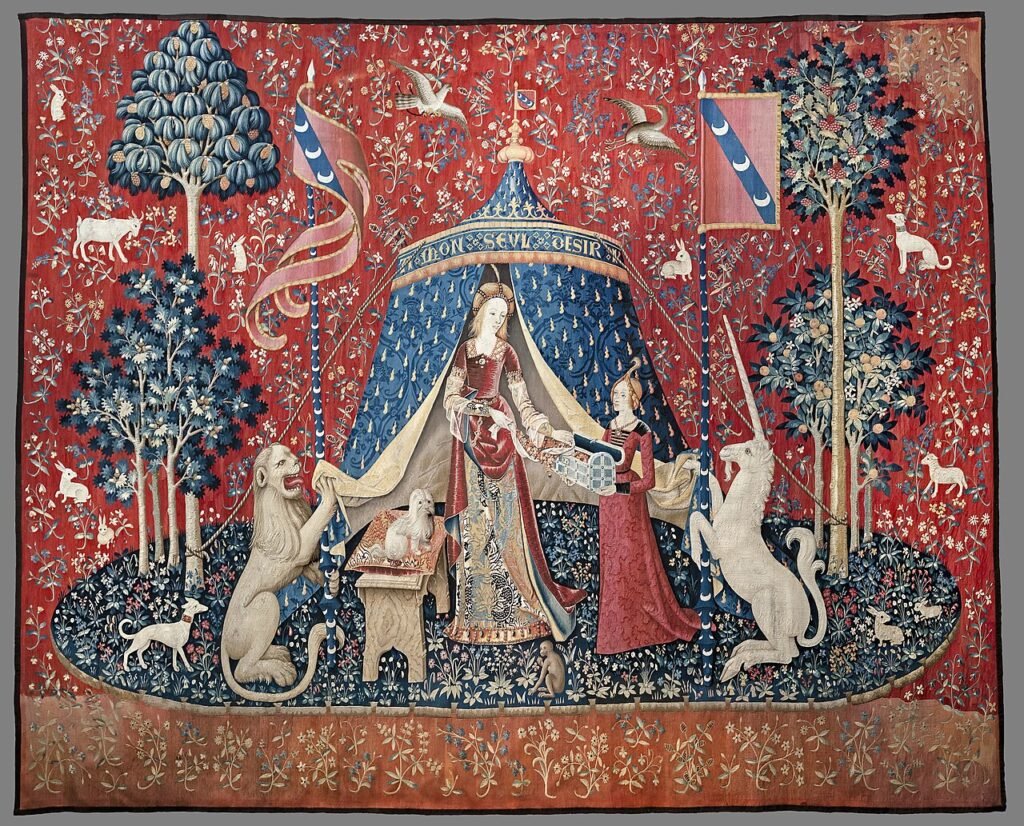
One of the most famous artistic representations of the unicorn is the late medieval tapestry series The Lady and the Unicorn, housed at the Musée de Cluny in Paris. These remarkable works explore themes of the senses, desire, virtue, and inner harmony. In her revolutionary interpretations on Divine Feminine and Mary perspective to the tapestries, Rigoglioso shed new light on the tapestries for me, and then even more things “clicked”. And I also understood why, years before, when wandering around Paris, and seeing Cluny museum, I just had to go in, not knowing that once I entered the place, seemingly random walk will end in hours of deep awe and activation of past life memories. The point of connection between Marys and the tapestries had created another connection for me – how the Unicorn was a Key Component of my inner journey towards integration of the very physical, very human aspects (Lyran, born as solar Leo, learning path of fire), with the very spiritual, aetherical ones (born deeply mystical and psychic, loving the Fae and Unicorn).
The central female figure is, as I see it, representing a state of integration — the meeting point between earthly experience and spiritual awareness. The lion and unicorn appear beside her, not as enemies, but as complementary forces. She is elevated to the state of Sacred Virgin (Virgo symbolism) by unifying the Lower Triad with the Upper Triad within her Heart, as the inner chamber or Sacred Communion of the physical and spiritual, together married in the divine. The importance of Virgin here is however so deep, it deserves a separate article.
The symbolism is profound. The lion represents embodied power. The unicorn represents refined consciousness. The feminine principle in the centre becomes the space where these energies are harmonised. The message is not that one must overcome the other. The message is that true mastery requires both.
The lion and the unicorn in heraldry: two guardians of nobility
The same symbolic relationship appears throughout European heraldry.
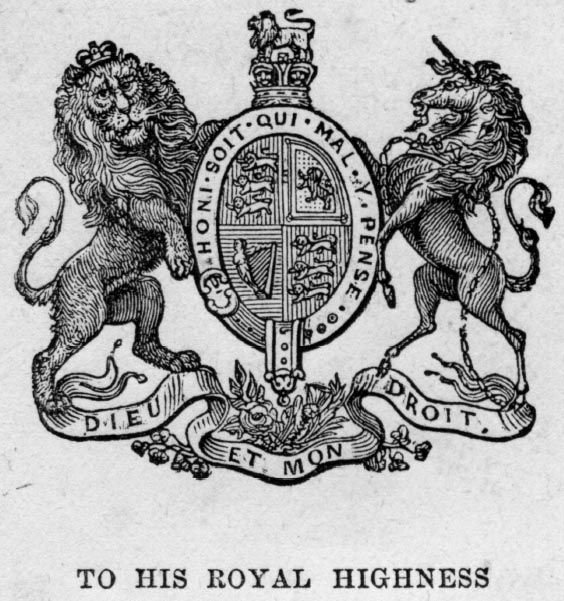
The lion and unicorn frequently stand as supporters beside shields, representing ideals a noble family wished to embody. While heraldry often reflected aspirations rather than perfect realities, these symbols expressed a vision of leadership that combined courage with moral responsibility.
The lion stood for earthly authority, protection, and the strength to act. The unicorn represented integrity, spiritual virtue, and a connection to higher principles. Together, they created a complete image of sovereignty.
Because a leader who only possesses the lion becomes a conqueror.
A leader who only possesses the unicorn may remain disconnected from the realities of the world, or become martyr.
The human being requires both. We need roots and vision. We need instinct and wisdom. We need the courage to act and the consciousness to know why we act.
The Lion Heart: where power and wisdom meet
This is the deeper meaning of the Lion Heart archetype.
The Lion Heart is not about becoming powerful in the external sense, but becoming integrated, in all the sanctity and rawness of the human experience.
Lower Triad: The lower centres of the body — the foundations of survival, creativity, desire, and personal power — represent our connection to Earth and embodiment. They are the places where we experience instinct, vitality, boundaries, and our ability to exist fully within the physical world.
Upper Triad: The upper centres represent expanded consciousness, meaning, intuition, compassion, and connection beyond the individual self, and neither can exist in isolation.
A spirituality that rejects the body becomes ungrounded.
A power that rejects consciousness becomes harmful.
The heart is the great alchemical chamber between them. The heart transforms instinct into courage. It transforms desire into devotion, transforms personal power into service.
The lion and the unicorn do not need to defeat each other. They need to come home to the heart.
Lyra: the language of harmony
When we look beyond terrestrial mythology and into modern esoteric traditions, the symbolism of the lion and unicorn continues to appear in new forms.
The constellation Lyra has long carried symbolic associations with music, harmony, and the power of vibration. Even its name connects to the lyre, the ancient instrument associated with Apollo and the ordering power of music.
Within contemporary spiritual traditions, including some starseed and galactic consciousness teachings, Lyra is often described as an archetypal origin of wisdom, harmony, and feline consciousness. As someone who’s soul origin stem in Lyra constellations, the deeply feline quality of being gracefully raw, is tender and loving and fierce, could not be a closer to home explanation.
This is a symbolic and spiritual language rather than a concept that can be measured through conventional science. Yet myths have always served humanity in this way: they create inner maps for experiences that are difficult to express through ordinary language.
For me personally, the symbolism of Lyra resonates through the image of the White Lion and Golden Lion — beings representing a refined feline intelligence: sovereign, protective, compassionate, and deeply harmonised.
The lion here is not the conqueror of the old rhyme. It is the awakened lion. The lion that has remembered the heart.
Lions and unicorns: cousins in the language of the sacred
In some modern spiritual teachings, unicorn consciousness is described as existing beyond the Lyra gateway, including through the work of authors such as Diana Cooper, who presents unicorns as beings connected with divine love, healing, and higher consciousness.
Whether approached as spiritual cosmology, archetypal language, or symbolic mythology, the deeper thread remains beautiful:
The lion and the unicorn are not opposites.
They are expressions of complementary sacred qualities.
The lion carries embodied sovereignty.
The unicorn carries purity of intention.
One protects.
One illuminates.
One grounds.
One elevates.
Together they form a bridge between Earth and spirit.
This is why the image continues to appear across traditions. The human soul has always searched for a way to unite power with goodness, strength with compassion, and individuality with service.
I leave you with the last sentences as the final inspiration on your personal journey of Lion Heart
To be strong enough to protect.
To be wise enough to listen.
To be humble enough to serve.
Sources & Further Reading
Smith, E. Boyd (illustrator), The Mother Goose Book (early 20th century editions based on traditional nursery rhymes). https://www.gutenberg.org/ebooks/24610
The Lady and the Unicorn Tapestries (La Dame à la Licorne)
The six medieval tapestries known as The Lady and the Unicorn are among the most important surviving works of European medieval art. Created around 1500, they are held at the Musée de Cluny in Paris.
The tapestries explore themes of the five senses and a mysterious sixth sense often interpreted as love, understanding, or inner harmony. The lion and unicorn appear as symbolic companions surrounding the central feminine figure.
Musée de Cluny official collection:
https://www.musee-moyenage.fr/collection/oeuvre/la-dame-a-la-licorne.html
Overview:
https://en.wikipedia.org/wiki/The_Lady_and_the_Unicorn
Further academic reading: Nathalie Bondil (ed.), The Lady and the Unicorn, Musée de Cluny / Réunion des Musées Nationaux.
Heraldry: Lion and Unicorn Symbolism
Lions and unicorns have been widely used in European heraldry as symbols of sovereignty, courage, virtue, and noble aspiration.
The unicorn appears particularly in Scottish heraldry as a symbol connected with purity, strength, and independence. Lions appear throughout European heraldic traditions as symbols of courage, authority, and leadership.
Sources:
Heraldry Society:
https://www.theheraldrysociety.com/
Encyclopaedia Britannica — Heraldry:
https://www.britannica.com/topic/heraldry
Medieval Unicorn Lore
The unicorn tradition in medieval Europe developed through classical and late antique sources, medieval bestiaries, Christian symbolism, and courtly literature.
Key themes include:
- purity
- divine mystery
- spiritual refinement
- untamed sacred power
Reference:
The British Library — Unicorn manuscripts and medieval symbolism:
https://www.bl.uk/
Search collection:
https://www.bl.uk/catalogues-and-collections
Diana Cooper — Unicorn Spiritual Tradition
Diana Cooper presents unicorns within a modern spiritual framework of angelic and higher consciousness traditions. This source is used as an example of contemporary esoteric interpretation rather than historical mythology.
Cooper, Diana.
The Magic of the Unicorns: More Magical Messages for the Soul.
Official author website:
https://dianacooper.com/
tarseed and Lyran Spiritual Literature
Modern Lyran and starseed traditions are part of contemporary spiritual movements rather than academic astronomy or anthropology. They are best approached as symbolic cosmologies and personal spiritual frameworks.
Examples:
Elena Danaan,
A Gift from the Stars: Extraterrestrial Contacts and Guides of Alien Races.
Author website:
https://www.elenadanaan.org/
The Law of One Material and Archetypal Consciousness
The Law of One material, also known as the Ra Material, is a channelled spiritual text that has influenced many contemporary discussions around consciousness, unity, and cosmic evolution.
Reference:
https://www.llresearch.org/
Scott Mandelker has written extensively about starseed concepts and the Law of One material.
Website archive:
https://www.scottmandelker.com/